
Arsenal News
After the match between Arsenal and Aston Villa ended, Declan Rice went straight to speak privately with head coach Mikel Arteta and demanded the immediate dismissal of a player on the team…

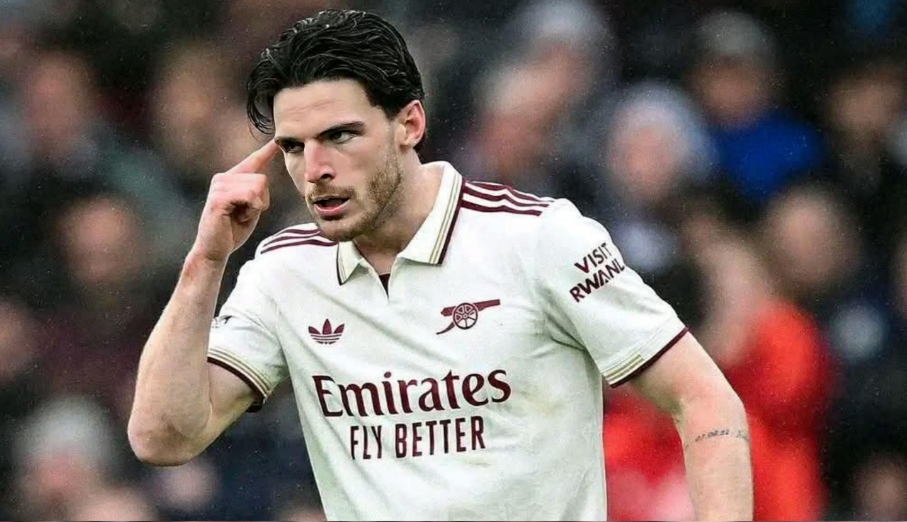
Following Arsenal’s intense and frustrating match against Aston Villa, an unexpected internal conflict arose behind the scenes.
A source close to the dressing room revealed that Declan Rice approached manager Mikel Arteta immediately after the final whistle. His demeanor was cold, serious, and visibly fatigued.
What ensued was a private discussion that quickly became the focal point of Arsenal’s post-match narrative: Rice insisted on immediate action concerning one of his teammates.
Martin Odegaard, who had just returned after more than two weeks away, found himself at the center of this controversy. Rice reportedly informed Arteta that Odegaard’s presence on the field had significantly disrupted Arsenal’s rhythm and cost the team a vital attacking edge.
He voiced his frustration clearly, stating that the team played “as if one man was missing” and that Odegaard’s lackluster performance heavily contributed to their inability to secure a win. The atmosphere surrounding the conversation was tense from the outset.
“Honestly, it would have been better if he didn’t step onto the pitch at all,” Rice allegedly remarked, his tone sharp and resolute. He contended that Arsenal’s structure became fragmented whenever Odegaard touched the ball, and that the forward’s lack of match fitness rendered the attack predictable and sluggish.
For Rice, who values intensity and precision, the disparity in performance was too significant to ignore — particularly in a match that Chelsea desperately needed to win.
Arteta listened attentively, taking in every word. As a manager recognized for his tactical discipline and high standards, he comprehended the frustration. Arsenal had generated opportunities throughout the match but lacked the finishing, fluidity, and decisiveness essential in Premier League contests.
Odegaard, despite his inherent talent and influence earlier in the season, clearly struggled to readjust after his lengthy absence. Nevertheless, Arteta understood that reacting emotionally could jeopardize the unity he had worked hard to cultivate.
Behind the scenes, the coaching staff exchanged worried looks. The tension in the dressing room can either inspire a team or cause it to fracture, depending on how leadership navigates the situation.
Rice’s demand was significant: he insisted that Odegaard be removed from the squad immediately, even if it meant sending him temporarily to the academy or the sidelines. For a pivotal midfielder to advocate for such a severe action indicated the depth of frustration within the team.
The timing only heightened the drama. Arsenal’s season had already been characterized by consistency issues, fan pressure, and media scrutiny. The last thing Arteta needed was for internal strife to escalate into public turmoil.
However, he also recognized that disregarding Declan Rice—one of the most dedicated and industrious players in the squad—could foster resentment. The manager was aware that he needed to consider every aspect carefully before reaching a decision.
In the hours that followed, Arteta withdrew to his office, scrutinizing match footage from various perspectives. He assessed Odegaard’s movements, passing decisions, defensive efforts, and positioning mistakes. The statistics were clear: Odegaard’s performance was significantly below the expected standard, and his lack of match fitness was painfully obvious.
Yet, statistics also lacked context—Arteta recalled how impactful Odegaard had been earlier in the season before his injury sidelined him for weeks.
As evening approached, Arteta reached out to several senior squad members—without disclosing the specifics of Rice’s request. He aimed to assess the overall sentiment. Some players quietly expressed that Odegaard’s return seemed premature. Others defended him, arguing that match readiness can only be achieved through playing.
The varied reactions highlighted the fragility of the situation. The team evidently required cohesion rather than discord, yet the prevailing frustration was undeniable.
By midnight, Arsenal supporters on social media had already become aware of the controversy. The online platforms erupted with discussions, theories, and intense debates. Some blamed Odegaard for passing to Bukayo Saka prematurely, while others accused Declan Rice of exaggerating. Many simply sought clarity from the club.
Rumors escalated quickly, placing additional pressure on Mikel Arteta to address the matter publicly — even before he made his final decision. This digital uproar heightened the stakes even further.
Ultimately, early the following morning, Mikel Arteta convened an internal meeting with his coaching staff. He articulated that his decision needed to prioritize the long-term stability of the team over the emotions of a single evening.
He acknowledged Odegaard’s subpar performance but also recognized his significance to the club’s tactical framework and future growth. Most importantly, he stressed the importance of supporting players returning from injuries instead of penalizing them for temporary setbacks.
Thus, Arteta announced his final decision — one that took many within the club by surprise: Martin Odegaard would NOT be removed or suspended. Instead, he would be placed on a structured, gradual return program and temporarily benched until he was fully match-fit. This strategy balanced discipline with support.
Odegaard would not be assured a starting position, but he also would not be sacrificed due to frustration stemming from one disappointing performance.
Arteta later privately explained that letting Odegaard go would harm squad morale far more than a tactical error in a single game.
His aim was to promote accountability without instilling fear or division. The coaching staff unanimously endorsed the plan, agreeing that the core issue was match sharpness, not attitude or commitment.
Rice’s concerns, although legitimate, would be resolved through solutions rather than punishment. It was a composed, strategic response to an emotionally charged situation.
Upon learning of the decision, Rice reportedly accepted it with professionalism, though his face betrayed a sense of lingering disappointment. Arteta reminded him that leadership is not solely about enforcing standards — it also involves supporting teammates as they strive to recover. Those words resonated deeply.
Rice nodded, acknowledging that while his frustration stemmed from passion, the team’s unity must always take precedence. The tension began to dissipate.
However, the narrative continues to ignite debate among fans and analysts. Some commend Arteta for exhibiting balanced leadership, while others argue he should have been more stringent with Odegaard.
The truth is that Arsenal is entering a pivotal stage of the season, and every decision — particularly internal ones — will influence the club’s direction. What unfolds next could define Arteta’s relationship with the team and determine how Arsenal performs in their forthcoming matches.
As training resumed the following day, Odegaard engaged intensely with the fitness staff, staying late for additional drills and conditioning. His resolve was evident. Teammates watched him quietly, aware of the immense pressure he faced to reestablish his standing.
Rice, too, trained with keen focus, directing his emotions into action rather than debate. Gradually, the atmosphere lightened. Arsenal’s narrative shifted from conflict to professionalism and the challenge of restoring trust.
Throughout this tense episode, one message became unmistakably clear: Arsenal’s season will hinge not only on tactics or talent but also on how the squad navigates adversity. Mikel Arteta’s decision to support Odegaard while addressing performance issues highlighted the kind of leadership that modern football requires.
Currently, the focus is on the players — to react, to enhance their skills, and to demonstrate that togetherness is more significant than irritation. The upcoming match will determine if the team has gained insights from the turmoil or if it will be overwhelmed by it.




-
 Arsenal News1 year ago
THE LATEST CONFIRMED TRANSFER NEWS AHEAD OF SUMMER TRANSFER WINDOW 2025: LIVERPOOL HAVE FINALIZED THEIR FIRST SUMMER TRANSFER BY AGREEING TO SIGN ✅ – RODRYGO HAS CHOSEN BETWEEN LIVERPOOL AND ARSENAL ✅ – VIKTORGYOKERES TO ARSENAL ✅
-

 Arsenal News1 year ago
THE LATEST CONFIRMED TRANSFER NEWS AHEAD OF SUMMER TRANSFER WINDOW 2025: MILOS KERKEZ “AGREEMENT DONE” WITH LIVERPOOL ✅ – ARSENAL AGREE GYOKERES DEAL ✅ – MANCHESTER UNITED HAVE COMPLETED THE SIGNING OF MATHEUS CUNHA FROM WOLVES…
-

 Arsenal News1 year ago
THE LATEST CONFIRMED TRANSFER NEWS AHEAD OF SUMMER TRANSFER WINDOW 2025. ZUBIMENDI TO ARSENAL ✅ – Kevin De BRUYNE TO LIVERPOOL ✅ AND TRANT ALEXANDER-ARNOLD UPDATE…
-

 Arsenal News1 year ago
THE LATEST CONFIRMED TRANSFER NEWS AHEAD OF SUMMER TRANSFER WINDOW 2025: LIVERPOOL HAVE FINALIZED THEIR FIRST SUMMER TRANSFER BY AGREEING TO SIGN ✅ – VIKTOR GYOKERES TO ARSENAL ✅ – JEREMIE FRIMPONG TO LIVERPOOL ✅ – RODRYGO UPDATES…
-

 Arsenal News1 year ago
THE LATEST CONFIRMED TRANSFER NEWS AHEAD OF SUMMER TRANSFER WINDOW 2025: LIVERPOOL SET TO FINALIZED THE SECOND SUMMER TRANSFER ✅ – ARSENAL AGREE GYOKERES DEAL ✅ – MANCHESTER UNITED SET TO SIGN £2.5M CUNHA ✅ – KLOPP SET FOR SENSATIONAL RETURN TO MANAGEMENT…
-

 Liverpool News2 years ago
Real Madrid have signed Trent Alexander-Arnold on a free transfer, after his contract with Liverpool came to an end, with an agreement now in place between the player and Real Madrid.
-

 Arsenal News1 year ago
THE LATEST CONFIRMED TRANSFER NEWS AHEAD OF SUMMER TRANSFER WINDOW 2025: BENJAMIN ŠEŠKO “AGREEMENT DONE” WITH ARSENAL ✅ – LIVERPOOL HAVE COMPLETED THE SIGNING OF FLORIAN WIRTZ FROM BAYER LEVERKUSEN ✅ – MANCHESTER UNITED AGREE BRYAN MBEUMO…
-

 Arsenal News1 year ago
BREAKING NEWS: Viktor Gyokeres to Arsenal summer transfer bombshell – ‘On his way’…