
Liverpool News
Just before the match, Leeds United’s Dominic Calvert-Lewin unexpectedly spoke out in a pre-match interview ahead of the clash with Liverpool. His comments were directed straight at Liverpool’s defense: “We know Liverpool…

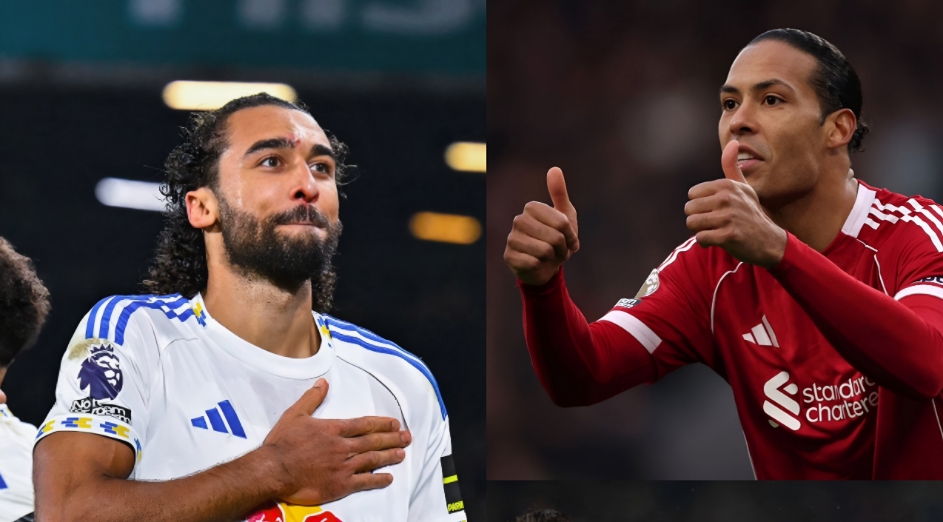
Just moments ago, Leeds United forward Dominic Calvert-Lewin unexpectedly ignited a pre-match controversy with a candid interview prior to his team’s encounter with Liverpool.
What started as routine media obligations quickly transformed into one of the season’s most provocative remarks, as Calvert-Lewin openly challenged the reliability of Liverpool’s defense and ridiculed their pride in captain Van Dijk.
Calvert-Lewin’s remarks were incisive, deliberate, and impossible to overlook. He asserted that Liverpool’s capacity to defend against attacking plays this season was “as weak as wet paper,” a phrase that rapidly circulated on social media and in sports news.
By citing Liverpool’s league position regarding defensive transitions, he positioned his comments not merely as banter, but as objective analysis — a tactic that made the insult resonate even more.
The Leeds United striker continued his assault by highlighting Ao Tanaka as a pivotal asset, boasting that his teammate had “torn apart defenses stronger than this all season.” Calvert-Lewin’s self-assurance bordered on disdain, implying that Liverpool’s defensive reputation was more a product of history than present performance.
His concluding statement — “They think they’re going to win? Don’t even dream of it” — solidified the moment as a direct provocation.
The response was swift and intense. Liverpool fans erupted online, accusing Calvert-Lewin of arrogance and disrespect. Many noted that such remarks often return to haunt players. Conversely, Leeds United supporters hailed the interview as a display of fearless honesty, commending Dominic Calvert-Lewin for not yielding to a so-called larger club.
Neutral observers deemed it one of the most audacious pre-match declarations of the Premier League season.
Behind the scenes at Liverpool, the interview did not incite panic — it fostered focus. According to various sources within the club, the video featuring Calvert-Lewin’s remarks was displayed in the dressing room shortly after it aired. The atmosphere reportedly shifted immediately. Music was silenced. Conversations ceased.
One staff member characterized the moment as “activating the team into competition mode.”
What many fans were unaware of is that Liverpool’s coaching staff had been preparing for this type of psychological maneuver. Leeds United’s speed and direct approach had been recognized as their main threat days prior. Calvert-Lewin’s remarks, rather than disclosing new insights, validated Liverpool’s internal scouting assessments.
Rather than feeling insulted, the staff interpreted the interview as evidence that Leeds United believed that speed alone would determine the outcome of the match.
Just five minutes after the interview gained traction, Liverpool captain Virgil van Dijk delivered a composed yet impactful counter-response. In contrast to Calvert-Lewin’s passionate tone, Van Dijk spoke with quiet authority. He dismissed the remarks without animosity, asserting that Liverpool preferred to “let football speak” and reminding rivals that preparation is more significant than predictions.
Those familiar with the situation assert that Van Dijk’s response had a significant impact due to its restraint. At a time when Liverpool’s defense has been under intense scrutiny, the captain neither denied the challenges nor shifted blame. Instead, he exuded confidence grounded in preparation, not arrogance.
The difference between Calvert-Lewin’s bravado and Van Dijk’s poise swiftly altered the narrative.
The real insight, however, lies in what transpired before Van Dijk publicly addressed the matter. Sources indicate that Van Dijk had already spoken to the squad privately moments before. He reportedly informed his teammates that comments like Calvert-Lewin’s typically originate from teams attempting to convince themselves they are on the same level.
According to an insider, Van Dijk remarked: “If they’re discussing this extensively, they’re concerned.”
Even more telling is the depth of Van Dijk’s personal preparation. Despite dealing with fitness challenges throughout the season, the Liverpool captain had sought extra tactical briefings specifically aimed at Leeds United’s wide players. He analyzed Calvert-Lewin’s preferred dribbling paths and Ao Tanaka’s off-ball movements, insisting on modifying defensive spacing to avoid isolation situations.
This level of engagement reportedly astonished even the coaching staff. Van Dijk was not merely getting ready to play — he was preparing to take charge. Analysts within the club observed that Liverpool’s defensive vulnerabilities often stemmed from collective positioning issues rather than individual mistakes.
Van Dijk advocated for structural discipline, aware that Leeds United would try to exploit openings with speed rather than through buildup.
Meanwhile, within Leeds United’s camp, Van Dijk’s reaction reportedly had an unforeseen psychological effect. Sources indicate that Calvert-Lewin did not expect such a composed and assured response. He had anticipated either silence or an emotional counter. Instead, Van Dijk’s calm demeanor instilled doubt.
One insider from Leeds United confessed that the squad became “much quieter” upon realizing Liverpool had taken the comments personally — but not emotionally.
This incident underscores the contemporary reality of football mind games, where contests commence long before the match begins. Pre-match interviews, viral videos, and social media responses now influence momentum as significantly as tactics do.
In this instance, Calvert-Lewin sought to gain an advantage through provocation, while Van Dijk countered with leadership grounded in preparation and conviction.
For Liverpool, this situation arises at a pivotal point in the season. Defensive inconsistency has rendered them vulnerable not only on the field but also in public perception. Opponents increasingly regard Liverpool as a team that can be mentally unsettled.
Van Dijk’s response, however, indicated a change — a determination to avoid being pulled into chaos or external narratives.
Internally, senior leaders commended Van Dijk’s management of the situation. One insider characterized it as “precisely what you expect from a captain under pressure.” Instead of escalating the conflict, Van Dijk absorbed it, shifted the focus, and strengthened unity. His response stood in stark contrast to Liverpool’s tumultuous image in recent years.
As kickoff nears, the match has evolved into more than just a tactical battle. It has transformed into a contest of mentality, discipline, and leadership. Will Leeds United’s confidence and speed outpace Liverpool as anticipated, or will the Reds’ composed preparation reveal the dangers of hasty bravado?
One thing is certain: Dominic Calvert-Lewin’s remarks have guaranteed that this match will be played with heightened intensity.
However, the covert preparation behind Liverpool’s defense — along with Reece James’s composed authority — implies that what may appear as vulnerability from the outside could actually be something much more perilous when challenged on the field.


-
 Arsenal News11 months ago
THE LATEST CONFIRMED TRANSFER NEWS AHEAD OF SUMMER TRANSFER WINDOW 2025: LIVERPOOL HAVE FINALIZED THEIR FIRST SUMMER TRANSFER BY AGREEING TO SIGN ✅ – RODRYGO HAS CHOSEN BETWEEN LIVERPOOL AND ARSENAL ✅ – VIKTORGYOKERES TO ARSENAL ✅
-
 Arsenal News10 months ago
THE LATEST CONFIRMED TRANSFER NEWS AHEAD OF SUMMER TRANSFER WINDOW 2025: MILOS KERKEZ “AGREEMENT DONE” WITH LIVERPOOL ✅ – ARSENAL AGREE GYOKERES DEAL ✅ – MANCHESTER UNITED HAVE COMPLETED THE SIGNING OF MATHEUS CUNHA FROM WOLVES…
-
 Arsenal News11 months ago
THE LATEST CONFIRMED TRANSFER NEWS AHEAD OF SUMMER TRANSFER WINDOW 2025. ZUBIMENDI TO ARSENAL ✅ – Kevin De BRUYNE TO LIVERPOOL ✅ AND TRANT ALEXANDER-ARNOLD UPDATE…
-
 Arsenal News11 months ago
THE LATEST CONFIRMED TRANSFER NEWS AHEAD OF SUMMER TRANSFER WINDOW 2025: LIVERPOOL HAVE FINALIZED THEIR FIRST SUMMER TRANSFER BY AGREEING TO SIGN ✅ – VIKTOR GYOKERES TO ARSENAL ✅ – JEREMIE FRIMPONG TO LIVERPOOL ✅ – RODRYGO UPDATES…
-
 Arsenal News10 months ago
THE LATEST CONFIRMED TRANSFER NEWS AHEAD OF SUMMER TRANSFER WINDOW 2025: LIVERPOOL SET TO FINALIZED THE SECOND SUMMER TRANSFER ✅ – ARSENAL AGREE GYOKERES DEAL ✅ – MANCHESTER UNITED SET TO SIGN £2.5M CUNHA ✅ – KLOPP SET FOR SENSATIONAL RETURN TO MANAGEMENT…
-
 Liverpool News1 year ago
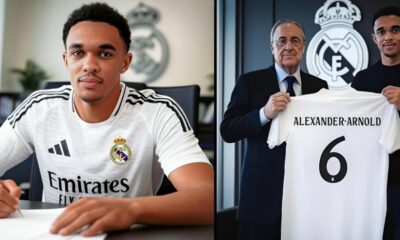
Real Madrid have signed Trent Alexander-Arnold on a free transfer, after his contract with Liverpool came to an end, with an agreement now in place between the player and Real Madrid.
-

 Arsenal News10 months ago
THE LATEST CONFIRMED TRANSFER NEWS AHEAD OF SUMMER TRANSFER WINDOW 2025: BENJAMIN ŠEŠKO “AGREEMENT DONE” WITH ARSENAL ✅ – LIVERPOOL HAVE COMPLETED THE SIGNING OF FLORIAN WIRTZ FROM BAYER LEVERKUSEN ✅ – MANCHESTER UNITED AGREE BRYAN MBEUMO…
-
 Arsenal News10 months ago
BREAKING NEWS: Viktor Gyokeres to Arsenal summer transfer bombshell – ‘On his way’…