
Liverpool News
GLOBAL SHOCK: Dominik Szoboszlai used his own money, donating the entire payment from his live appearance to save a pair of conjoined twin girls in Hungary! In the middle of an extremely dangerous surgery, when the doctors no longer knew what to do due to an unexpected complication, the entire operating room fell into despair…

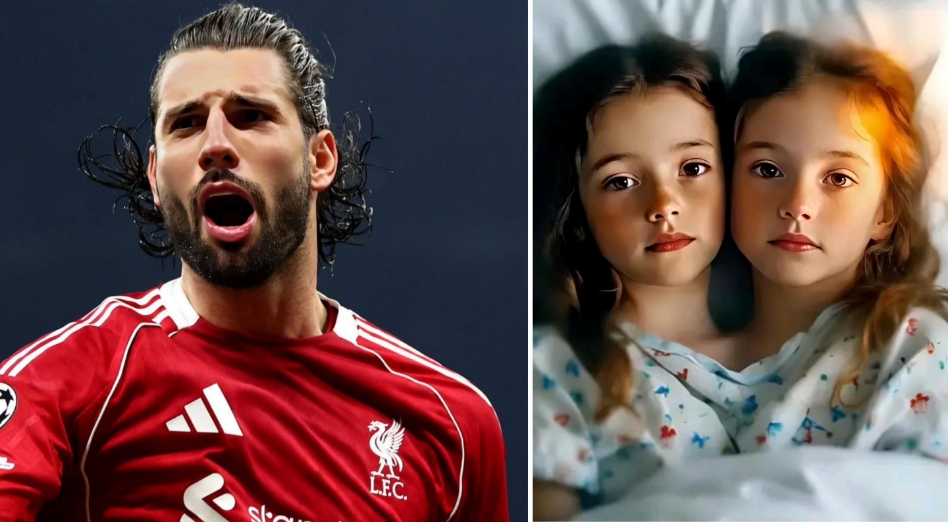
In a captivating fictional twist that has enthralled audiences worldwide, the tale of Dominik Szoboszlai using his own funds to assist in saving a pair of conjoined twin girls in Hungary has gone viral.
In this imaginative story, the Liverpool star contributed every penny from a recent live event, discreetly transferring the money directly to the family without alerting the press. This act alone would have been enough to astonish the world — but what followed elevated the narrative to legendary status.
The fictional tale begins in a prominent hospital in Buenos Aires, where medical professionals were gearing up for an exceptionally high-risk separation surgery. The surgical team understood that the procedure would be lengthy, intricate, and fraught with unpredictability. For months, they meticulously analyzed scans, practiced techniques, and choreographed every action down to the last second.
The parents, filled with fear yet hope, entrusted their final hopes to the surgeons, praying silently in the corridor.
However, reports from this fictional account suggest that midway through the operation, an unforeseen complication arose. One of the twins experienced a sudden drop in blood pressure, while the other exhibited signs of cardiac distress. The doctors were taken aback, realizing that the situation had escalated beyond their expectations.
Monitors blared, nurses hurried, and senior specialists were summoned back into the operating room. Yet, despite their extensive expertise, the team found themselves completely immobilized, unable to stabilize the delicate newborns.
The atmosphere in the operating room grew tense, saturated with fear and desperation. Some doctors exchanged hushed whispers; others gazed helplessly at the monitors. It was the moment every medical professional dreads — when knowledge and skill fall short.
In this fictional narrative, someone quietly said, “We’re losing them.” A wave of hopelessness washed over the room. The chief surgeon bowed his head, convinced they were mere seconds away from disaster.
And then, in accordance with the dramatic fictional narrative, something astonishing occurred. The doors to the operating room swung open, and to everyone’s astonishment, Dominik Szoboszlai entered. Dressed in sterile hospital attire, he approached with a look of resolve.
The medical team stood in shock, bewildered by how a global football icon had gained access to such a restricted area. Some gazed in disbelief; others thought they were imagining things due to the stress. Yet, Szoboszlai’s demeanor was calm, self-assured, and oddly comforting.
In this fictional account, Szoboszlai raised his hands and urged the doctors to listen. He clarified that he had not come to intervene in a medical capacity but to convey something the parents were too emotional to articulate.
According to the tale, he carried a handwritten letter from the twins’ mother — a letter that contained one last request that the surgeons had overlooked. It was not a medical directive, but a profoundly personal message that entirely transformed the atmosphere in the room.
The letter, fictional in this context, reminded the doctors of their purpose: the twins had been born prematurely after their mother valiantly overcame complications.
She spoke of hope, bravery, and unconditional love, expressing to the surgeons that even if the outcome was uncertain, she had faith in them wholeheartedly. Her words shattered the emotional barrier within the room.
Several doctors were reportedly moved to tears, realizing they needed to reset, take a breath, and trust in their skills once more.
Szoboszlai then took an action that left everyone in disbelief — he requested the doctors to take a 30-second mental reset. “Close your eyes,” he softly instructed, “breathe, and remember why you chose to be healers.” In this fictional tale, the entire room fell into silence as the surgeons took a moment to re-center themselves.
It was not a medical intervention, but rather an act of emotional leadership, a grounding moment that rekindled clarity and tranquility. When the chief surgeon reopened his eyes, something had shifted.
With a renewed focus, the medical team reevaluated the situation and identified a small vascular anomaly that had led to the sudden complication. It had remained unnoticed amidst the chaos but became apparent due to their regained concentration.
Acting swiftly yet accurately, the team stabilized both infants and proceeded with the operation, filled with cautious optimism. What had moments ago seemed like an impending disaster transformed into a delicate yet manageable situation. The atmosphere brightened, once again infused with hope.
As hours went by, the surgeons executed the procedure with remarkable precision, tackling one of the most intricate operations in pediatric medicine. In this fictional account, the parents waited with bated breath while Szoboszlai remained close by, silent, respectful, and emotionally engaged.
His presence provided solace, particularly to the mother, who found in him a reminder that the world had not forgotten her children. The waiting room felt heavy, yet it was no longer devoid of hope.
At last, as dawn broke, the doctors emerged with news that would fictionalize its way into headlines: the twins had been successfully separated. Tears of relief and joy filled the hospital corridor as the parents embraced the medical team. The chief surgeon, weary yet victorious, approached Szoboszlai with heartfelt gratitude.
“You reminded us to be human,” he stated. “And humanity saved them.” This line resonated across social media, amplifying the emotional weight of the story.
In this dramatic fictional narrative, Szoboszlai turned down interviews, declined recognition, and requested that the family’s privacy be honored. He maintained that the true heroes were the doctors, nurses, and parents — not himself. Nevertheless, news of the event spread swiftly, reaching fans across the globe.
People lauded his kindness, humility, and unique ability to engage in a crisis not as a celebrity, but as a compassionate human being. His gesture inspired millions.
The fictional narrative came to a close with the twins recuperating in individual incubators, both stable and showing positive responses. Their parents referred to the occurrence as a “miracle,” yet they prioritized the expertise of the medical staff above all else. Szoboszlai, quietly departing after the procedure, left behind a brief note: “Love saves lives.
Always.” This note became emblematic, symbolizing the emotional resilience that helped everyone navigate through the most challenging phase of the operation.
Although entirely fictional, the tale resonates deeply as it underscores the significance of compassion and our shared humanity. It envisions a reality where public figures transcend their fame to assist everyday individuals in remarkable situations.
While Dominik Szoboszlai has never set foot in an operating room or participated in a surgical procedure, this fictional account encapsulates the type of inspiration that many fans find admirable in their idols — a poignant reminder that kindness, empathy, and bravery are the true qualities that can transform lives.


-

 Arsenal News11 months ago
THE LATEST CONFIRMED TRANSFER NEWS AHEAD OF SUMMER TRANSFER WINDOW 2025: LIVERPOOL HAVE FINALIZED THEIR FIRST SUMMER TRANSFER BY AGREEING TO SIGN ✅ – RODRYGO HAS CHOSEN BETWEEN LIVERPOOL AND ARSENAL ✅ – VIKTORGYOKERES TO ARSENAL ✅
-

 Arsenal News10 months ago
THE LATEST CONFIRMED TRANSFER NEWS AHEAD OF SUMMER TRANSFER WINDOW 2025: MILOS KERKEZ “AGREEMENT DONE” WITH LIVERPOOL ✅ – ARSENAL AGREE GYOKERES DEAL ✅ – MANCHESTER UNITED HAVE COMPLETED THE SIGNING OF MATHEUS CUNHA FROM WOLVES…
-

 Arsenal News11 months ago
THE LATEST CONFIRMED TRANSFER NEWS AHEAD OF SUMMER TRANSFER WINDOW 2025. ZUBIMENDI TO ARSENAL ✅ – Kevin De BRUYNE TO LIVERPOOL ✅ AND TRANT ALEXANDER-ARNOLD UPDATE…
-

 Arsenal News11 months ago
THE LATEST CONFIRMED TRANSFER NEWS AHEAD OF SUMMER TRANSFER WINDOW 2025: LIVERPOOL HAVE FINALIZED THEIR FIRST SUMMER TRANSFER BY AGREEING TO SIGN ✅ – VIKTOR GYOKERES TO ARSENAL ✅ – JEREMIE FRIMPONG TO LIVERPOOL ✅ – RODRYGO UPDATES…
-

 Arsenal News10 months ago
THE LATEST CONFIRMED TRANSFER NEWS AHEAD OF SUMMER TRANSFER WINDOW 2025: LIVERPOOL SET TO FINALIZED THE SECOND SUMMER TRANSFER ✅ – ARSENAL AGREE GYOKERES DEAL ✅ – MANCHESTER UNITED SET TO SIGN £2.5M CUNHA ✅ – KLOPP SET FOR SENSATIONAL RETURN TO MANAGEMENT…
-

 Liverpool News1 year ago
Real Madrid have signed Trent Alexander-Arnold on a free transfer, after his contract with Liverpool came to an end, with an agreement now in place between the player and Real Madrid.
-

 Arsenal News10 months ago
THE LATEST CONFIRMED TRANSFER NEWS AHEAD OF SUMMER TRANSFER WINDOW 2025: BENJAMIN ŠEŠKO “AGREEMENT DONE” WITH ARSENAL ✅ – LIVERPOOL HAVE COMPLETED THE SIGNING OF FLORIAN WIRTZ FROM BAYER LEVERKUSEN ✅ – MANCHESTER UNITED AGREE BRYAN MBEUMO…
-

 Arsenal News10 months ago
BREAKING NEWS: Viktor Gyokeres to Arsenal summer transfer bombshell – ‘On his way’…